

I’m done paying to watch women’s sports get used as a political weapon
Here’s an unpopular opinion: stop going to WNBA games.
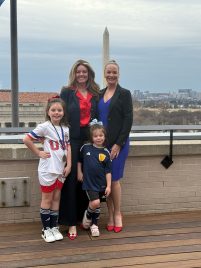
As a former NCAA champion runner and now a mom of two girls who play sports, I have spent my whole life believing that sports teach kids things they cannot learn anywhere else. Teamwork. Respect. Sportsmanship. Leadership. Confidence. That is what I want for my daughters. And it is exactly what these leagues are failing to teach right now.
I am not talking about politics for politics’ sake. I am talking about what my girls see when they watch a WNBA or NWSL game today. They see leagues that cannot even agree on what a woman is. They see fans booed for wearing shirts that ask for fair competition. They see a team roll out a new trans mascot with “inclusive pronouns”. They see dirty fouls and ejections becoming their own storyline. They see Trans messaging on the jumbotron. And they see a message, over and over, that standing up for the very category they are watching, the female category, makes you the villain.
Recently, two fans at an Indiana Fever road game were told to cover their shirts, which simply said they support protecting women’s sports, or leave the arena. The WNBA later admitted that never should have happened. Now, the Toronto Tempo just introduced a new trans team mascot who uses “she/they” pronouns, timed to a game against the Fever, the same week star guard Sophie Cunningham was booed by a crowd for saying she wants young girls to be able to compete without facing male athletes. The NWSL has its own version of this. Supporters groups across the league have organized “Trans People Belong” campaigns, complete with flags in the stands, while the NWSL has released no policies to exclude males from women’s sports. My daughters do not need a marketing campaign. They need a fair category to compete in.
Here is what genuinely mixes me up. Out of these two professional women’s leagues, full of hundreds of athletes, we currently have one active player willing to stand up and say, plainly, that girls deserve their own category.
One.
Sophie Cunningham.
And she should not be the only one saying it.
Tennis has quietly done the “harder” thing. This year the WTA rolled out a genetic eligibility test, a simple cheek swab, to confirm that everyone competing in the women’s category actually belongs there. No press conference theater. No mascot controversy. Just a sport that decided its female category was worth defining and defending. That is what standing up for girls actually looks like, and it deserves our attention and our support a lot more than a league that cannot say the word “women” without adding an asterisk.
The mind boggling part is what the WNBA and NWSL are actually dividing people over. Not politics. Not race. Not even coaching decisions. They are dividing fans, sponsors and their own players over whether women deserve a category of their own. That is not inclusion. That is a league telling half its fan base, including moms like me, that wanting fairness for our daughters makes us the problem, and that the right move is to sit down and be silent about it. You are telling young girls they do not matter enough to protect, and that they do not get a voice in the matter.
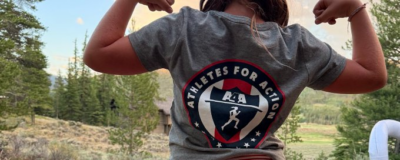
That is the real cost here, and it is bigger than one league or one season. Ninety-four percent of women in the C-suite played sports growing up. Sports is where girls learn to lead, to show up on time, to work through conflict with a teammate and still take the court together the next day, to grind for something bigger than themselves. That is exactly why I helped start Athletes for Action, to protect, advocate for, and educate people about the opportunities that made women like me who we are. If we teach an entire generation of girls that their own sports category is negotiable, and that they will be booed or shouted down for saying it should not be, we do not just lose some games. We lose the confidence and the leadership that sports is supposed to build, and we lose the future business leaders, coaches, and advocates that generation of girls was supposed to become.
So here is my ask:
Stop buying tickets to the WNBA. Stop buying tickets to NWSL games. If you want to support the athletes actually standing up for a fair women’s category, do it directly. Support the brands Sophie Cunningham has partnered with. Follow the women’s tennis players who backed a real eligibility standard instead of a hashtag. Put your money behind people fighting for our daughters’ category, not leagues that keep tripping over themselves trying to avoid the question.
I will not be taking my girls to a WNBA or NWSL game this year. Not because I do not love these sports, but because I love them enough to want them to still exist, fair and intact, by the time my daughters are old enough to dream about playing at that level. Sports are supposed to lift our girls up.
It is time we stopped paying for the ones that tear them down instead.
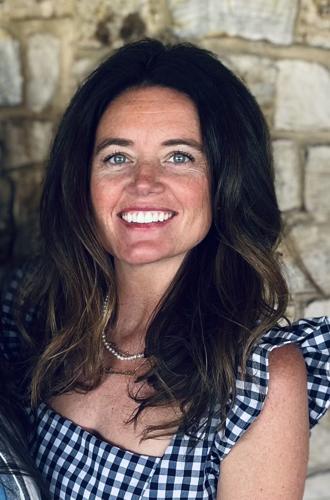
Megan Kaltenbach Burke is a Colorado resident and mother to two daughters. Megan was a standout track performer in high school, winning 15 Class 5A state championships. Her efforts earned her a scholarship to the University of North Carolina at Chapel Hill, where she won two NCAA Championships, set an American record in the distance medley relay, and earned her degree in journalism. She is a co-founder of Athletes for Action.